
What Defines the Most Successful Pilates Studios? Lessons from 2 That Sold for Millions
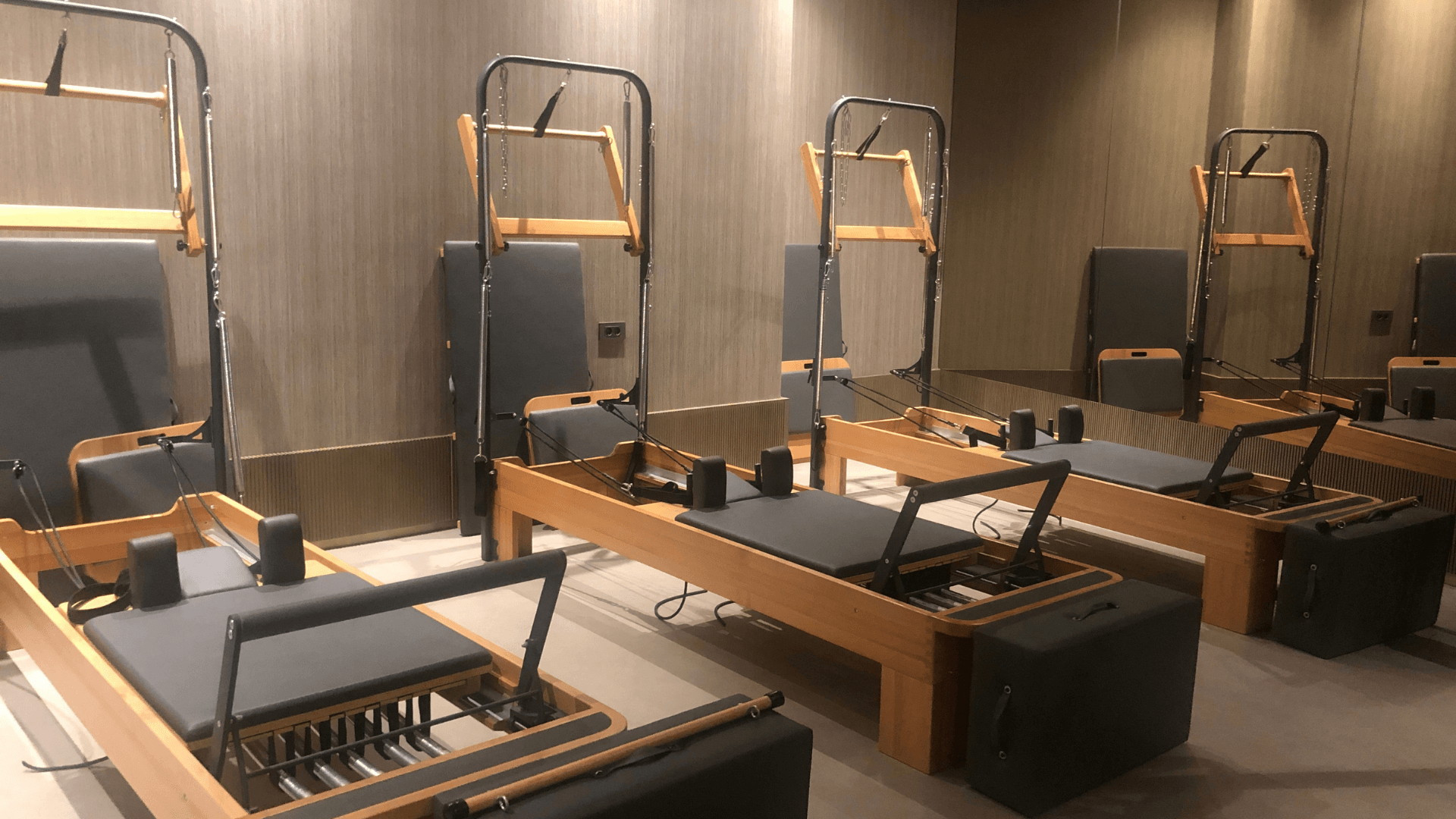
A packed schedule and a waitlist feel like success. They aren't the same thing as a successful business. A studio can fill every class and still leave its owner underpaid, worn out, and holding something that would be hard to sell for what it should command.
I've guided owners through dozens of Pilates studio sales, and the studios that turn out to be most valuable are rarely the biggest or the busiest. They're the ones built a particular way from the start. Here's what actually defines a successful Pilates studio, two real studios that got there by very different routes, and the traits they shared that any owner can build toward.
What Defines a Successful Pilates Studio
A successful Pilates studio is one that stays profitable without the owner working in it every day. That's the whole test. It’s also what makes a fitness studio valuable enough for someone else to buy. If the studio pays its owner fairly for their role, turns a profit beyond that, and could keep running if the owner stepped back and paid someone else to do their job, it's successful. Everything else is a version of that.
By that measure, the most successful Pilates studios aren't always the household names. When people picture a thriving studio, they think of the franchises with a location in every city, the Club Pilates and Solidcore of the world. Those are impressive businesses. But the success stories worth telling are often independent studios you've never heard of, built by a single owner and sold quietly for seven figures.
If your studio already runs without you, it may sell for more than you think. Here's how I help owners ready to explore a sale.
Success Benchmarks: Revenue, Profit, and Retention
A handful of numbers separate a healthy studio from a merely busy one.
- Owner-payable profitability. The baseline. The business covers a real salary for the owner's role and still profits on top.
- Retention. What share of members stay month to month. It's the number that makes or breaks a studio over the long run.
- Utilization. Of the reformers in each class, how many are filled. "Full" in a healthy studio is around 75%, not 100%. Your prime-time classes are packed and your off-hours aren't, and that's normal.
- The growth curve. Expect roughly 20 to 40% revenue growth in the first year or two, then a flattening. Meaningful growth in year five is hard, and chasing it isn't always the point.
The economics vary widely from studio to studio. Monthly memberships commonly fall between $150 and $300, while the investment behind the business can range from a $25,000 bootstrapped six-reformer studio to a $500,000 build-out. Those numbers provide context, but they don’t define success. What matters is how profitably and productively the studio uses its capacity and investment.
Exit Value as a Measure of Success
There's one measure most owners leave off the list entirely: what the business itself would sell for. Value isn't the same as size. A studio can grow to several locations and still command less than a smaller, leaner setup. The owners who create the most valuable studios treat the eventual sale as part of the plan rather than an afterthought once they're ready to leave.
Examples of Success: 2 Studios, 2 Different Paths
I’ve seen a lot of studios come to market over the years. There are two in particular that capture what the journey from purchase to exit looks like when it's done well. Both were small and independent Pilates studios that grew into multi-location studios and sold for seven figures within the same window.
How they got there looked nothing alike, and that’s what makes the comparison useful. The traits that show up in both, despite everything that differs, are the ones to pay attention to.
Both are real case studies with identifying information left out.
The Two-Location Reformer Studio
Starting with less than $20,000, this studio built a highly repeatable model across two dense, productive locations—and ultimately sold for about $3 million.
At a glance
- Started: Early 2020s with $15,000-$20,000 and no loan
- Grew to: 2 locations, each with ~12 reformers and ~40 classes per week
- Model: Consistent contemporary group-reformer classes with instructors trained in-house
- Exit: Sold at its peak for approximately $3 million
How it started
The founder came from a dance background and opened her first studio during Covid. She bootstrapped the business with $15,000–$20,000 and no outside financing, starting with about 12 reformers, close to 40 classes a week, and roughly 10 teachers.
From the beginning, the concept was intentionally consistent. Members could expect much the same experience from one class to the next, creating a clear product rather than a studio built around the individual style of whichever instructor happened to be teaching.
What she built
That first studio became two densely equipped, tightly scheduled locations.
Instead of building a large organization around them, she kept the team lean and created her own instructor pipeline. Teachers came through the studio’s training program, and the strongest fits stayed on to teach the method and experience members already knew.
Over time, that bench became strong enough for the founder to stop teaching classes and privates herself. The experience no longer depended on her being in the room, and the business could operate without her day-to-day labor.
What made it successful
The strength of this studio wasn’t its size. It was how much value the owner created within a relatively small footprint.
The class model was repeatable, the locations used their capacity well, and the training program produced instructors who could maintain the experience without the founder. Together, those things made the business both productive and transferable: members weren’t simply paying for access to one talented owner, and a future buyer wouldn’t need to replace her work personally.
How she exited
Rather than continuing to add locations simply because the model was working, she sold while the business was performing at its peak.
The two-location studio ultimately sold for approximately $3 million—more than the three-location business below. Its exit is a useful reminder that buyers aren’t simply counting doors. They’re buying the profitability, systems, team, and performance inside them.
She connected with me early, after just opening her second location. I advised her to see the second location through, and hire a manager while withdrawing herself from teaching so many classes and privates. I recommended two more years and she crushed it in 18 months. When we took the business to market, we had multiple offers, and the seller was paid in full at closing without needing to use SBA. Those 18 months and the changes she made earned her an extra ~$2M.
The lesson: A smaller footprint can create significant value when every location is productive and the business no longer depends on its founder.
The Three-Location Reformer Studio
This founder built toward an eventual sale from the beginning, adding locations deliberately while putting the management and staffing structure in place to support them.
At a glance
- Started: During COVID with personal training and about $20,000, with no loan
- Grew to: 3 locations opened roughly two years apart; 10 machines per location
- Model: Higher-intensity reformer concept with centralized management and instructor training
- Exit: Sold for approximately $2 million
How it started
The founder was a lifelong fitness instructor with experience across several methods. During COVID, she began offering personal training from a small rented space near her home, investing about $20,000 of her own money and taking no loan.
She eventually developed a faster, higher-intensity take on the traditional reformer class. But one thing distinguished her approach from the beginning: she knew that selling the business was ultimately the goal.
That changed how she built it.
What she built
The first location opened with 10 machines. Rather than expanding as quickly as demand allowed, she established a deliberate cadence: a second location two years later and a third location two years after that. The operating structure stayed remarkably lean as the footprint grew.
One general manager oversaw all three locations, while a lead teacher ran the studio’s training program and maintained its instructor pipeline. That meant each new location plugged into an existing system instead of simply adding more work for the founder. By the time the third studio was established, the business had both the scale of a multi-location operation and the management structure to run without her at the center of it.
What made it successful
The defining strength of this business was intentionality.
Expansion wasn’t the goal in itself. Each location was added on a measured timeline, while management and instructor development grew alongside the footprint. The founder wasn’t creating three separate studios that she personally had to hold together; she was building one business capable of operating across three locations.
She also treated eventual saleability as something to work on before she was ready to sell. Early valuations helped establish where the business stood and what still needed attention, giving her time to address issues on her own schedule rather than under the pressure of a transaction.
How she exited
By the time the third location was running smoothly, the infrastructure needed for a clean sale was already there: centralized management, an established training program, a reliable instructor bench, and a business designed to operate beyond its founder.
With that preparation already done, she sold the three-location business for approximately $2 million.
She first came across my exit-strategy talks early on and reached out again two years later as a sale drew closer. Our work centered on benchmark valuations and preparing the business to sell, with real attention to timing, so she could sell at her peak, fully prepared and on her terms.
The result also makes an important comparison possible. Despite having one more location, this business sold for less than the two-location studio above. Scale created a successful exit, but scale alone didn’t determine value.
The lesson: If selling is part of the long-term plan, building the management, staffing, and operating systems for that exit years in advance can make the business easier to transfer when the time comes.
5 Characteristics of the Most Successful Pilates Studios
Strip away the formats and the growth strategies, and the two studios come down to the same five things. That's the useful part: when owners who did almost everything differently still share the same sellable traits, those are traits you can trust. Each of the five below shows up clearly in both studio success journeys discussed above.
1. Real Profit, Not Sweat Equity
Every owner really wears two hats. One is the work you do inside the studio, like teaching classes, covering the desk, running privates. The other is owning the business itself. A studio that can't pay a real wage for the first hat isn't a business yet. It's a job you happen to own.
Plenty of studios look profitable only because the owner quietly absorbs a full salary’s worth of that work for free. Pay a market rate for every role you personally fill, and the real profit is what’s left when someone else is paid to do your job. That figure shows a buyer how much of the profit survives your departure, because stepping into your shoes means hiring for everything you used to do yourself.
Both founders paid themselves properly for their work and still turned a profit on top. Their profits truly reflected what the business earned, not what the owner gave up in unpaid hours. It's also why two studios with the same revenue can sell for very different amounts, since the one leaning on the owner's free labor has less underneath it than it appears.
2. The Studios Run Without The Owner
Can the studio carry on if you step away? That question, more than any other, decides what buyers will pay for your business. For both owners, stepping out of the day-to-day was an opportunity for growth.
- The two-location reformer studio founder expanded first, only later training a bench of her own teachers so the classes ran without her. Only then could she sell knowing the business didn’t revolve around her.
- The three-location reformer studio founder built structure ahead of scale: one general manager across all three sites, a lead teacher running instructor training. Each new location plugged into a system that already existed rather than stretching her thinner, which is what made a new site every other year possible.
Independence and growth turned out to be the same thing.
3. They Train and Retain Their Teachers
Neither owner staffed up with expensive outside hires. Both trained their own teachers through their own programs, kept the ones who embodied studio culture, and held onto them. Home-grown teachers cost less, stay longer, and represent the brand better than instructors brought in from elsewhere, and a stable teaching team is one of the first things a buyer looks for. Light management did the rest.
That is one of the most reassuring things to inherit. A loyal team, plus a training program that keeps replenishing it, means the studio's quality doesn't leave on closing day. The program itself becomes an asset, a way to produce your own staff instead of competing to rent someone else's.
4. They Keep Classes Full of Loyal Members
The strongest studios aren't the fanciest ones crushing Instagram the hardest. They're the ones keeping the members they already have and filling the classes that matter.
It's a quieter kind of growth than opening doors, but it's the kind that builds real value. Filling the capacity you have costs far less than adding more, and a studio that runs full is a studio a buyer can count on.
Manage retention and utilization well, and you build a steadier, more valuable business than any amount of top-of-funnel chasing will produce.
5. They Are Deliberate About Exit Planning
The most valuable studios are sold on purpose, years in the making. It's the step most owners skip. Both of these owners treated the sale as something to prepare for:
- They ran early valuations, so they always knew where they stood and what still needed work.
- They fixed the unglamorous things buyers scrutinize early on, from staffing structure to the legal setup of the business.
Then they sold at their peak, while the studio was still growing, and before burnout set in or a key teacher left or a competitor opened nearby.
That timing is everything. It is the difference between a good outcome and a life-changing one. The owners who capture it don't get lucky; they plan for it. Whether you're planning to sell in a few years or just want to know you're on the right track, it's never too early to start planning a strong exit. Our Seller Roadmap lays out the steps, and it's the lowest-commitment way to start.
Is Your Pilates Studio Built for a Strong Exit?
A strong exit isn't reserved for the biggest studios or a lucky few, and it isn't a function of how many locations you can open.
It comes from building a profitable studio that operates without you, and from preparing the sale long before you need to.
Your path won't look like either of theirs, and it doesn't need to.
One stayed small. The other spread across three locations. Both walked away with a strong sale, the smaller studio selling for the highest price.
What carries over to your situation isn't the format or the footprint. It's the two things underneath every good exit: a business that holds up when you're not in it, and a plan set in motion years before the closing.
You don't have to know your timeline to start. Many of the owners I work with came to me years before they sold, wanting to understand what their studio would sell for what it would take to sell it at the best terms possible.
When you'd like to talk through what that looks like for your studio, book a free call to chat.